Wall mounting a TV saves valuable floor space, keeps cables away from children and pets, and creates a clean, modern aesthetic. However, mounting a heavy TV on a UK wall requires understanding wall construction types, weight tolerances, and selecting the correct fixings.
📺 UK Aerial & AV Installation Standards
Determining Your Wall Construction Type
Before drilling, you must identify whether you are mounting onto a plasterboard stud wall or a solid masonry brick wall, as this dictates the weight capacity and the specific wall plugs or anchors required. UK homes generally have two types of internal walls: solid masonry (brick or blockwork) and stud partition walls (plasterboard over timber or metal studs).
Masonry walls can support almost any size TV using heavy-duty wall anchors. Stud walls, however, require you to locate the vertical timber studs using a stud finder and screw the bracket directly into the wood. Never rely on plasterboard-only fixings for TVs over 43 inches.
Calculating the Perfect Mounting Height
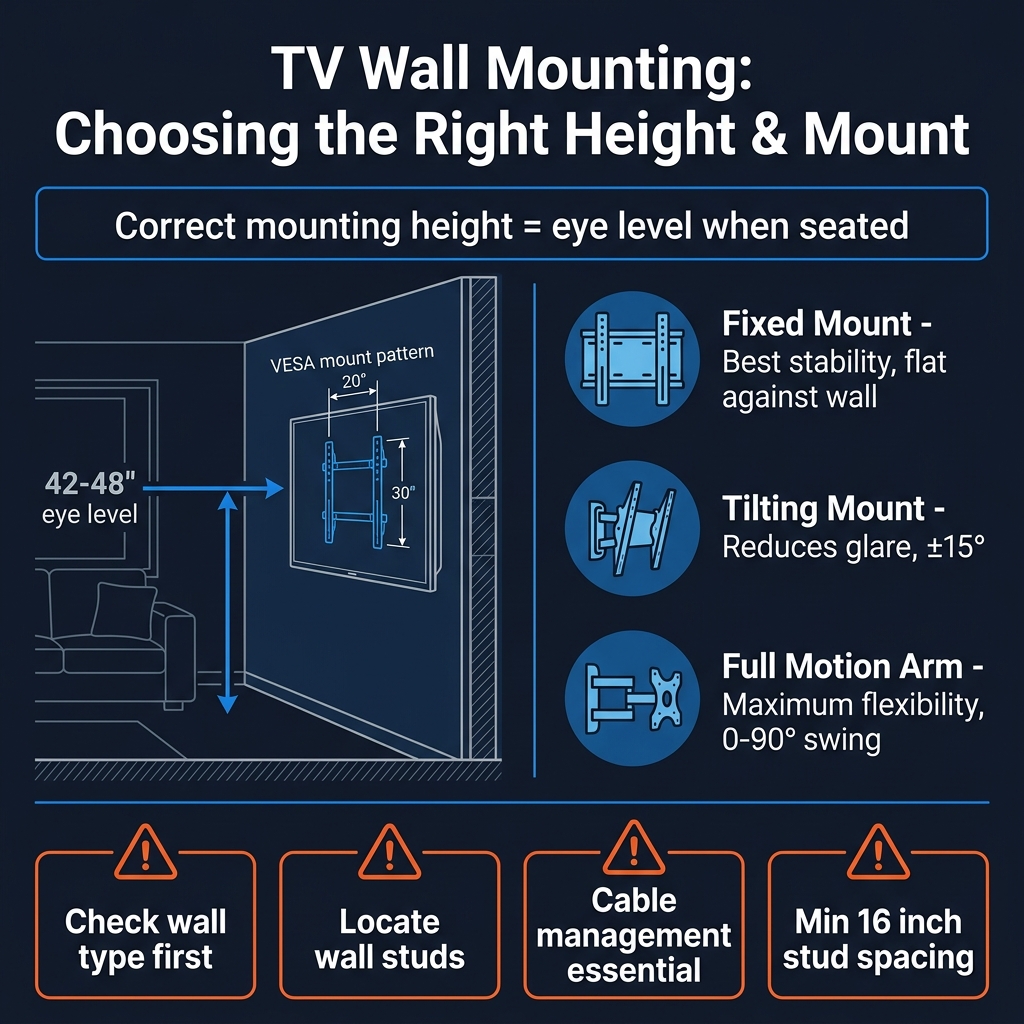
To calculate the perfect mounting height for your TV, ensure the center of the screen sits exactly at eye level when you are comfortably seated, which is typically around 1 to 1.2 meters from the floor. The most common mistake when wall mounting a TV is placing it too high — often referred to as the "mantelpiece trap." Looking up at a TV causes neck strain over long viewing periods.
The center of the TV screen should ideally be at eye level when you are seated in your primary viewing position. For most living rooms, this means the center of the TV is between 40 to 45 inches (approx. 100-115cm) from the floor.
Understanding VESA Brackets and Mounting Standards
Every modern television utilizes VESA mounting standards, which are the standardized hole pattern measurements on the back of your TV that must match your chosen wall bracket for a secure fit. VESA (Video Electronics Standards Association) brackets are the industry standard for securely attaching TVs to wall mounts. The bracket's dimensions, specified by a two-number code (e.g., 100x100), indicate where the mounting holes should be drilled into your TV's chassis.
When selecting a VESA-compatible wall mount in the UK, ensure it matches or exceeds your TV's requirements. For instance, a 200x200 VESA bracket can support most TVs up to 65 inches. Always follow the manufacturer's guidelines for weight capacity and installation.
Ensuring Safe Installation with UK Building Codes
Safe TV installation in the UK requires careful compliance with local building regulations, particularly BS 7671 electrical standards when running power cables inside walls or near existing electrical points. To ensure the structural integrity of your installation, familiarize yourself with BS 8458:2015, which outlines best practices for securing wall-mounted objects. This standard recommends using wall anchors or masonry screws for solid walls and toggle bolts for stud partitions.
When mounting a heavy TV in the UK, consider consulting a professional installer who can assess your wall type, calculate load-bearing capacity, and select appropriate fixings compliant with local building codes.
Cable Management Solutions for a Tidy Installation
Achieving a sleek, professional finish relies on effective cable management, whether you opt for surface-mounted D-Line trunking or routing cables behind plasterboard using brush plates and conduit. Proper cable management is crucial for maintaining the aesthetic appeal and functionality of your wall-mounted TV setup. In the UK, you can use cable clips or raceways to conceal cables along the wall, following BS 7671 wiring rules.
For a more discreet approach, consider installing a cable channel in the skirting board or purchasing a cable cover kit that fits behind your chosen wall mount. These solutions not only keep your space clutter-free but also protect cables from damage and potential tripping hazards.
Video Walkthrough
TV Mount Bracket Comparison
| Bracket Type | Protrusion | Movement | Best Suited For |
|---|---|---|---|
| Flat / Fixed | Minimal (15-25mm) | None | Clean flush look, eye-level viewing |
| Tilting | Moderate (30-50mm) | Up/Down (approx 15°) | Mounted above eye level (bedrooms) |
| Full Motion / Articulated | High (up to 600mm) | Multi-directional | Corner mounting, open-plan rooms |
Frequently Asked Questions
Need a Professional Quote?
Our certified UK engineers are ready to help. Get a free, no-obligation quote for professional installation tailored to your property.