Despite the rise of internet streaming services, a high-quality TV aerial remains the most reliable way to receive free-to-air broadcasts in the UK. Freeview provides access to over 70 TV channels and 30 radio stations with zero monthly subscription fees, provided you have a functioning aerial.
📺 UK Aerial & AV Installation Standards
Loft Aerials vs Outdoor Rooftop Aerials
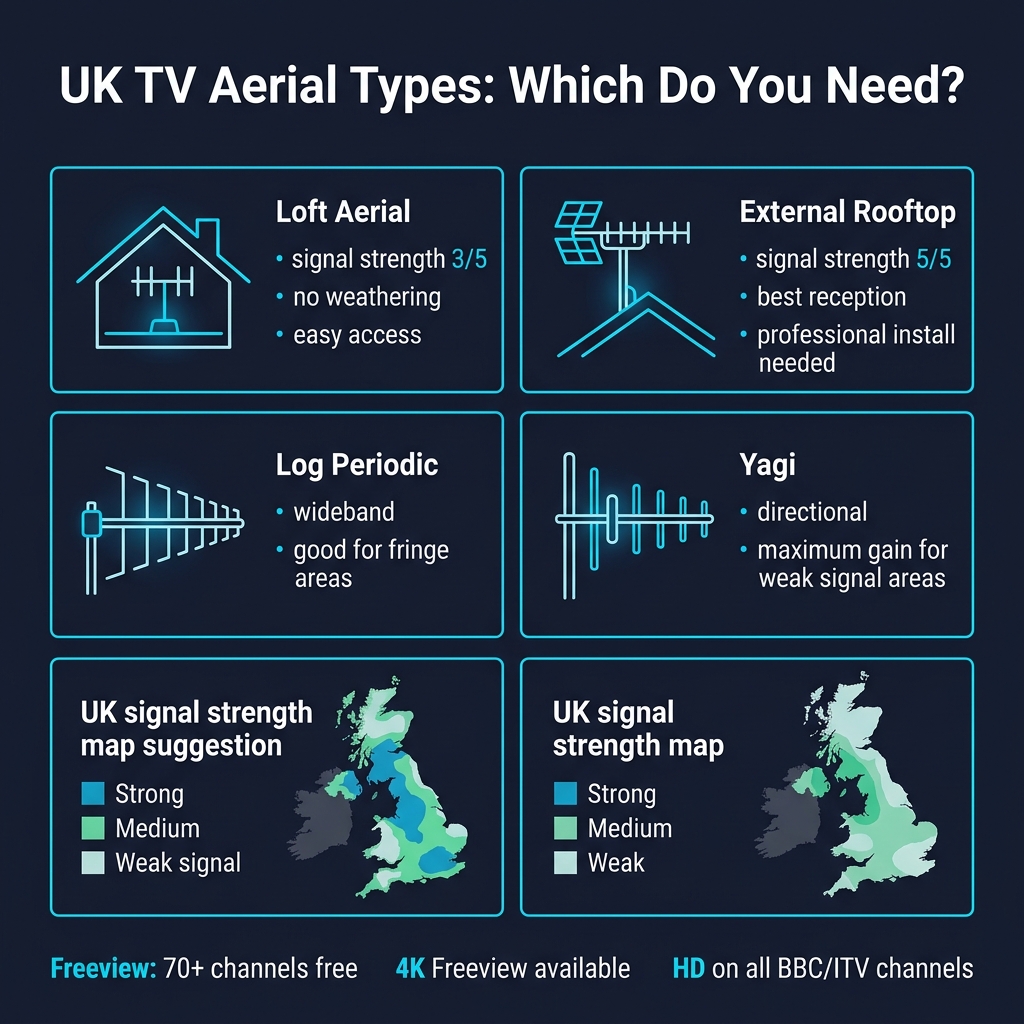
Choosing between a loft aerial and an outdoor rooftop aerial depends on your local signal strength, as outdoor installations offer the most reliable reception while loft aerials provide a discreet alternative protected from UK weather. A loft aerial is protected from UK weather, doesn't alter the exterior look of your house, and is easier to service. However, roof tiles, loft insulation, and roofing timber attenuate the signal, reducing strength by up to 30-50%.
An external rooftop aerial is required if you live in a medium-to-weak signal area. Mounting the aerial high on a chimney stack or gable end provides a clear line of sight to the nearest transmitter.
Understanding Signal Interference and Its Solutions
TV signal interference in the UK is commonly caused by 4G or 5G mobile masts, poor cabling, or local obstacles, but it can be easily resolved using high-quality shielded cables or LTE filters. Signal interference can significantly degrade the quality of your Freeview reception. Common sources include electrical appliances, fluorescent lights, wireless networks, and even other TV aerial systems. To mitigate these issues, ensure your aerial cable is kept away from potential sources of interference such as power cables and fluorescent lighting.
If you're experiencing persistent signal interference, consider installing a high-quality signal booster. These devices amplify the signal strength while also filtering out unwanted noise, resulting in clearer picture quality. Always use a booster that complies with British Standards BS 8418 for professional installation.
Complying with Building Regulations and Conservation Areas
Installing a TV aerial on a UK property rarely requires planning permission, but you must comply with local conservation area rules and building regulations regarding height and placement restrictions. When installing a TV aerial in the UK, especially in listed buildings or conservation areas, it's crucial to adhere to local building codes and obtain necessary permissions. For example, in England and Wales, the installation of satellite dishes on listed buildings requires Listed Building Consent (LBC) under the Planning (Listed Buildings and Conservation Areas) Act 1990.
In Scotland, similar requirements exist under the Planning (Listed Buildings and Conservation Areas) (Scotland) Act 1997. Always consult with your local planning authority to ensure compliance with these regulations before proceeding with any installation work.
Estimating Installation Costs for UK Aerial Installations
The average cost of a professional TV aerial installation in the UK ranges from £150 to £300, influenced by aerial type, location height, and any additional cabling requirements. The cost of installing a TV aerial in the UK varies depending on factors such as the type of aerial needed, the complexity of the installation, and your location. On average, you can expect to pay between £100 and £300 for a standard loft or rooftop aerial installation. This price typically includes the cost of materials, labour, and a warranty on the work carried out.
For more complex installations in challenging locations or those requiring additional equipment like signal boosters, costs can rise significantly. Always obtain detailed quotes from professional installers before proceeding to ensure you understand all associated costs.
Video Walkthrough
Aerial Type Suitability
| Aerial Type | Signal Gain | Location | Best For |
|---|---|---|---|
| Yagi Aerial | Medium-High | Outdoor Rooftop | Standard reception zones, pointing to transmitter |
| Log Periodic | Medium | Outdoor / Loft | Wideband signal, low interference environments |
| Grid Aerial | High | Outdoor (High) | Weak signal or fringe reception areas |
Frequently Asked Questions
Need a Professional Quote?
Our certified UK engineers are ready to help. Get a free, no-obligation quote for professional installation tailored to your property.