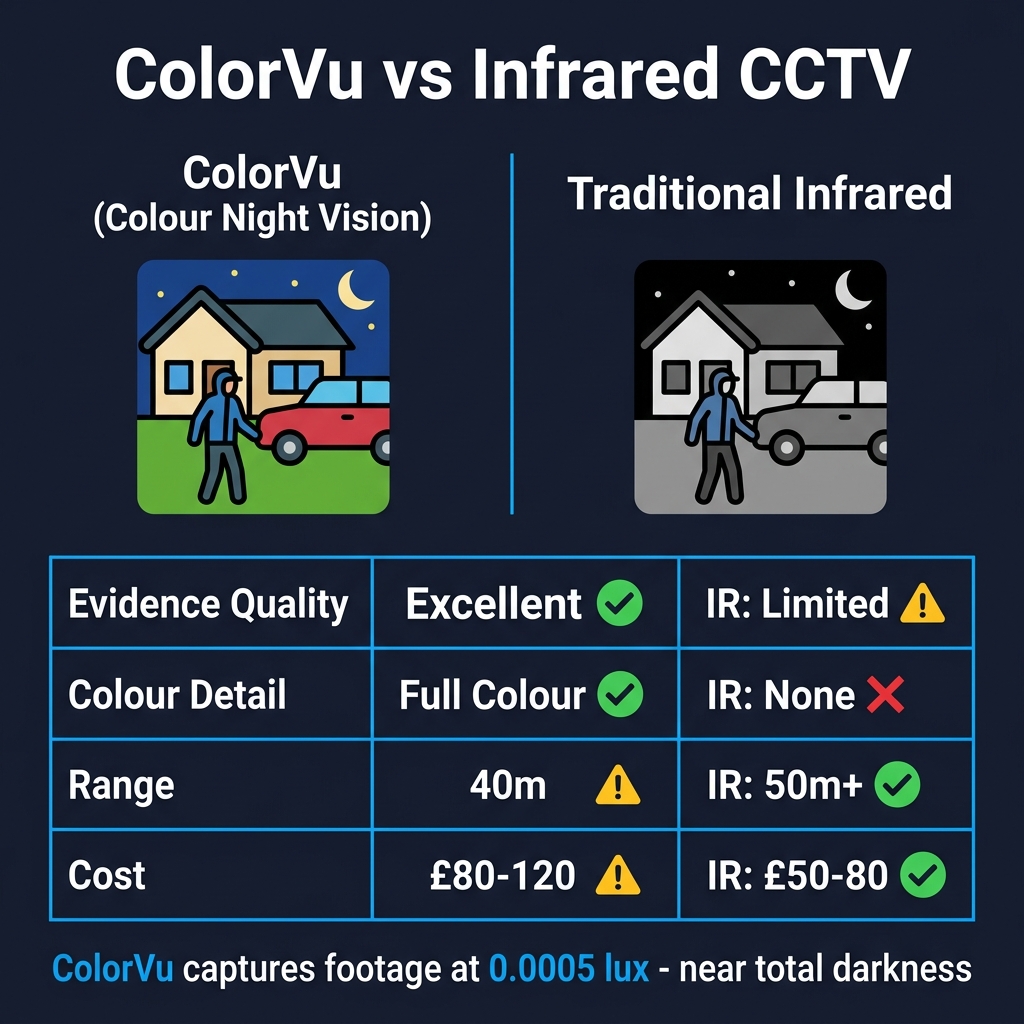
Standard CCTV cameras have a major limitation: when it gets dark, they switch to black-and-white infrared mode. ColorVu is Hikvision's trademarked name for their full-colour night vision technology that solves this problem. It produces full-colour footage 24 hours a day.
📷 Professional CCTV Configuration Standards
How ColorVu Technology Works
Hikvision's ColorVu technology delivers full-colour video 24/7 by pairing a large F1.0 aperture lens with a highly sensitive sensor that captures and processes up to four times more light than standard security cameras. ColorVu achieves colour night vision through a combination of three innovations: extra-large aperture lenses (f/1.0 or f/1.2), high-sensitivity Sony Starvis image sensors, and warm white supplemental LEDs.
The warm white LEDs emit visible light that illuminates the scene in colour without the harsh, blinding effect of older security lights.
Understanding UK Building Codes for CCTV Installation
Compliance with UK building regulations and planning guidelines is essential when mounting cameras externally to ensure your system respects structural integrity, electrical safety, and neighbor privacy. When installing ColorVu cameras in the UK, it's crucial to adhere to local building codes and guidelines. The most relevant code is Document Q of the Building Regulations, which covers the installation of dwellings. This document specifies requirements for security glazing, access to buildings, and resistance to manual attack.
Additionally, you should be aware of British Standards such as BS 8418, which provides recommendations for the design and operation of CCTV systems. Compliance with these standards ensures that your ColorVu system is installed in a way that balances security with privacy concerns.
Selecting the Correct Cable Grade for UK Climates
Choosing the right outdoor-grade, UV-protected Cat6 cabling is critical to prevent water ingress and cable degradation caused by the damp, unpredictable UK weather. The choice of cable grade is critical when installing ColorVu cameras in the UK. The country's climate, with its mix of wet and cold conditions, requires cables that can withstand harsh weather. For outdoor installations, it's recommended to use CAT6e or CAT7 Ethernet cables, as they offer better protection against moisture and signal interference.
These cables should be rated for at least IP67, meaning they are dust-tight and can survive immersion in water up to 3 feet deep for no more than 30 minutes. Additionally, consider using cable clips or conduit to further protect the cables from damage.
Maximizing ColorVu Performance with Proper Lighting
To achieve the sharpest nighttime footage, you must strategically balance the camera's built-in warm supplemental light with ambient street or security lighting to eliminate harsh shadows and glare. While ColorVu cameras excel in low-light conditions, optimizing lighting can significantly enhance their performance. In areas where color accuracy is critical, consider installing warm white LED lights with a color temperature between 2700K and 3000K. These lights will provide sufficient illumination without causing glare or disturbing residents.
When selecting light fixtures, choose ones that are weather-resistant and compliant with the relevant British Standards, such as BS EN 60598-1 for luminaires. Installing these lights on motion sensors can help conserve energy while maintaining security.
Video Walkthrough
ColorVu vs Traditional Infrared
| Feature | ColorVu | Traditional IR |
|---|---|---|
| Footage color | Full color 24/7 | Black & white at night |
| Evidence quality | Excellent (color details) | Limited |
| Light source | Warm white LED (visible) | Infrared LED (invisible) |
Frequently Asked Questions
Need a Professional Quote?
Our certified UK engineers are ready to help. Get a free, no-obligation quote for professional installation tailored to your property.