A visible, high-quality burglar alarm is one of the most effective deterrents against break-ins. Statistics show that properties without alarms are three times more likely to be targeted by burglars. In 2026, home alarms have evolved from simple noisemakers into fully connected smart hubs.
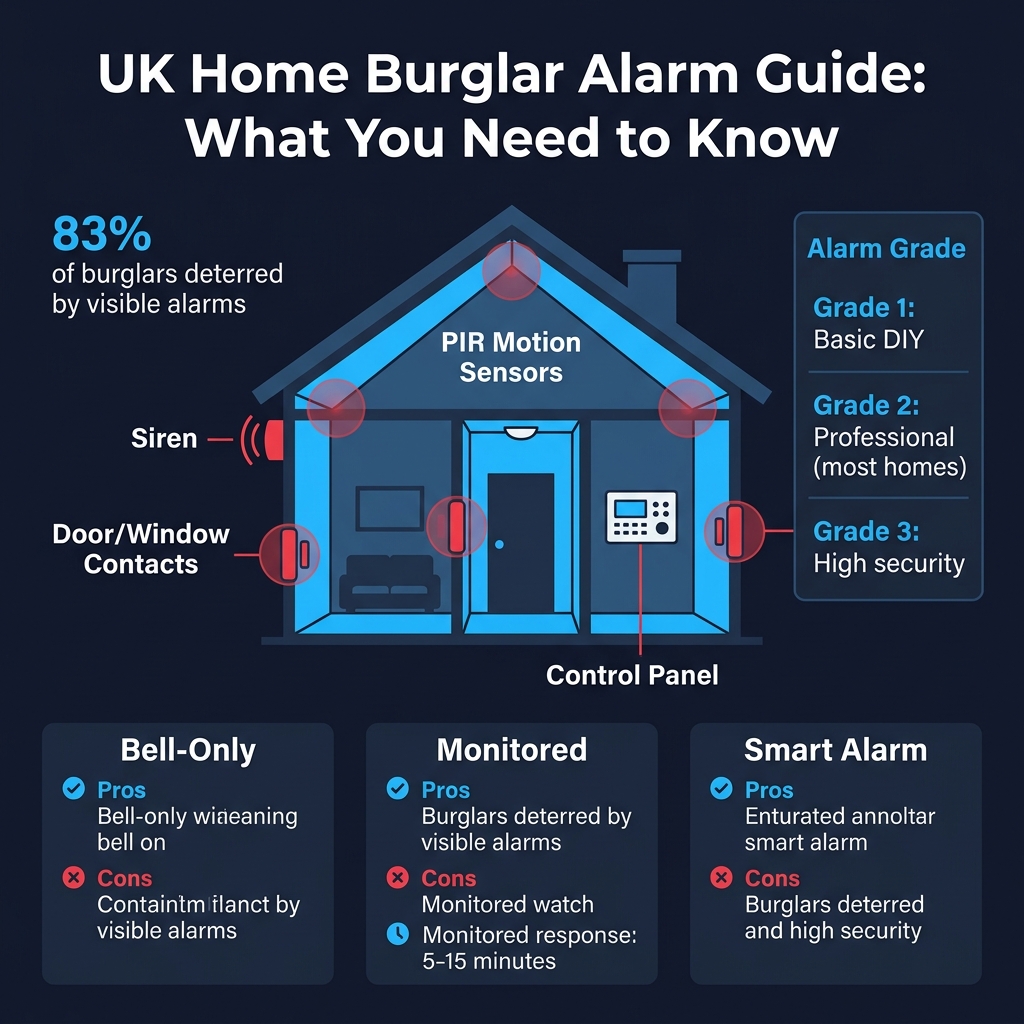
📱 Smart Home & Alarm Grade Ratings
Wired vs Wireless Alarm Systems
Choosing between wired and wireless alarm systems depends on whether you prefer the flawless, interference-free reliability of hardwired connections or the rapid, disruption-free installation of modern wireless sensors. Wired alarm systems are highly reliable, low-maintenance (no batteries to change in sensors), and ideal for new builds or during home renovations where floorboards are up.
Wireless alarm systems (like Ajax or Pyronix Enforcer) are fast to install, require no decorative damage, and use encrypted dual-band radio frequencies to prevent wireless jamming.
Understanding NSI and SSAIB Certification for UK Alarms
Selecting an installer certified by the National Security Inspectorate (NSI) or the Security Systems and Alarms Inspection Board (SSAIB) guarantees that your home security system meets strict UK standards, which is often a mandatory requirement for UK home insurance policies and police response. In the UK, burglar alarm systems must be certified by an approved body to meet national standards. The National Security Inspectorate (NSI) and the Security Systems and Alarms Inspection Board (SSAIB) are the two main certification bodies.
NSI and SSAIB certifications ensure that your alarm system meets British Standards for security, fire, and emergency lighting. They also verify that the installer is competent and reliable. For new installations, always choose an NSI or SSAIB certified alarm system to avoid potential issues with insurance claims in case of a break-in.
Smart Features and Integration for Modern UK Homes
Integrating your burglar alarm with smart home technologies allows for real-time smartphone alerts, automated arming schedules, and seamless cross-device communication for maximum peace of mind. Modern burglar alarms are now fully integrated with smart home systems, allowing remote monitoring via smartphone apps. Key features include real-time alerts, two-way audio, and integration with other security devices like CCTV cameras.
When choosing a smart alarm system in the UK, look for products that comply with British Standards BS 8418 for intruder alarms and BS EN 50131 for electronic access control. This ensures compatibility with UK power supplies and adherence to safety standards.
Average Installation Costs for UK Burglar Alarms
In 2026, the average cost to install a professional home security system in the UK ranges from £350 for a basic wireless kit up to £900 or more for a comprehensive, multi-zone wired system. The average cost of installing a burglar alarm in the UK ranges from £500 to £2000, depending on the type and complexity of the system. Basic wired systems start at around £500, while advanced wireless smart systems can cost up to £2000 or more.
Factors that influence installation costs include the number of sensors, the size of your property, and any additional features like smart home integration or remote monitoring. Always obtain quotes from multiple installers to ensure you're getting a competitive price.
Video Walkthrough
Home Alarm Grade Standards
| Alarm Grade | Security Level | Typical Application | Police Response Eligible? |
|---|---|---|---|
| Grade 1 | Low Risk | Small flats (DIY alarms) | No |
| Grade 2 | Medium Risk | Standard residential homes | Yes (with monitoring contract) |
| Grade 3 | High Risk | Commercial properties / luxury homes | Yes |
Frequently Asked Questions
Need a Professional Quote?
Our certified UK engineers are ready to help. Get a free, no-obligation quote for professional installation tailored to your property.