Choosing between wired and wireless CCTV for a British home isn't just about installation convenience — it's about how each system performs across a year of genuine UK weather: persistent rain, frost, wind, and freezing winters.
⚡ Structured Network & Audio Standards
The UK Weather Challenge
British weather is notoriously unpredictable, presenting a unique challenge for outdoor security systems that must withstand relentless rain, damp conditions, and freezing winter temperatures. With an average of 133 days of rain per year and freezing winter temperatures, the UK environment is harsh on external electronics.
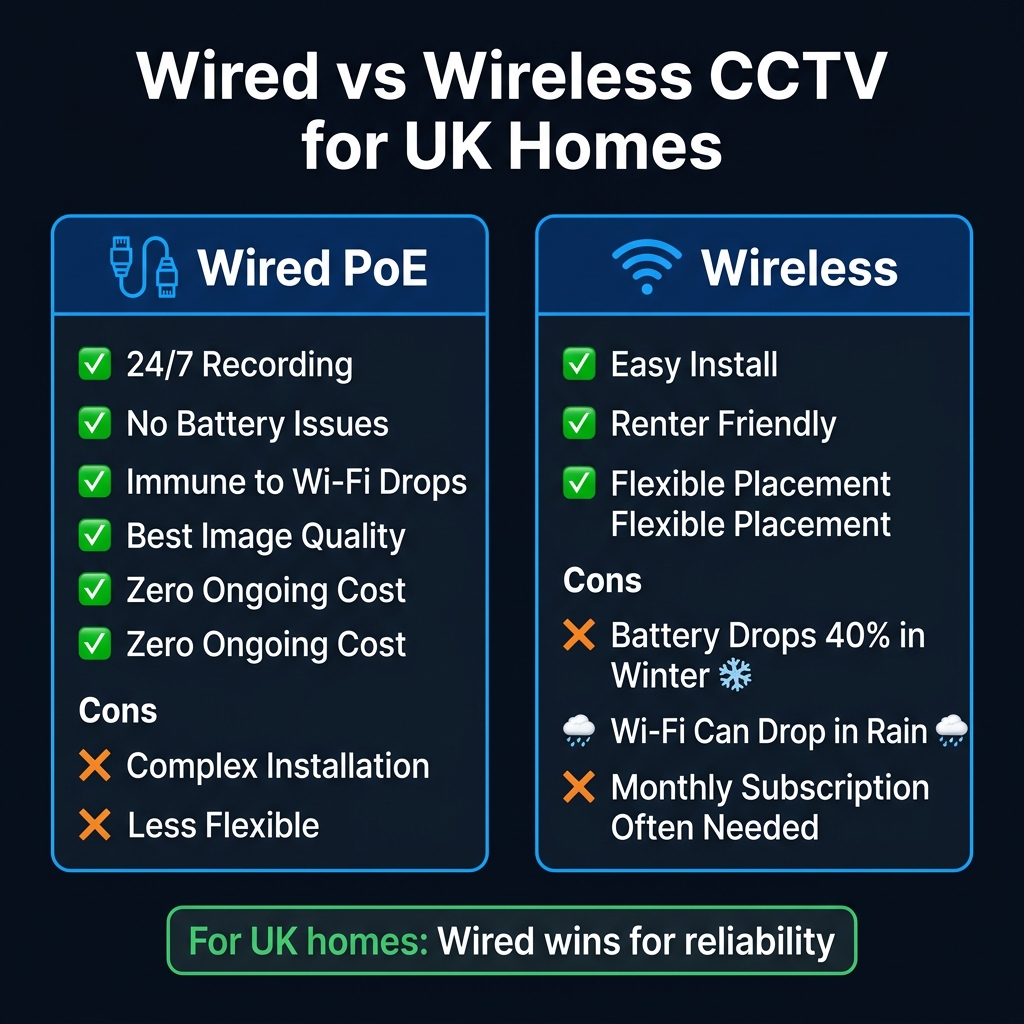
Wired systems rely on physical copper connections inside weather-sealed conduit, making them immune to the elements. Wireless systems rely on batteries that degrade in the cold, and Wi-Fi signals that can be degraded by wet brick walls.
Understanding the Impact of UK Weather on CCTV Battery Life
Freezing UK winter temperatures severely degrade lithium-ion batteries in wireless cameras, often cutting their operational life in half and requiring frequent, inconvenient manual recharges. In the UK, winter temperatures can plummet below freezing, leading to significant challenges for wireless CCTV systems that rely on battery power. Lithium-ion batteries, commonly used in these devices, experience a rapid decline in performance when exposed to cold conditions. According to British Standards BS 7671, electrical installations in damp or wet locations require additional protection measures, such as increased insulation and weatherproofing. However, these safeguards do not extend to the internal components of wireless CCTV cameras, which are directly affected by the external environment.
The degradation of battery life in cold temperatures can lead to frequent replacements, increasing maintenance costs over time. A study by the Energy Saving Trust found that the average cost of replacing a lithium-ion battery in a wireless device is around £30-£50 per year. Over a five-year period, this could amount to an additional £300-£500 spent on batteries alone for a single wireless CCTV system.
Assessing Wi-Fi Signal Degradation in UK Weather Conditions
Heavy rain and thick fog directly interfere with 2.4GHz and 5GHz wireless frequencies, leading to dropped connections and delayed notifications for wireless CCTV systems. Rain and damp weather conditions can significantly affect the performance of wireless CCTV systems that rely on Wi-Fi signals. According to BS 8418, guidelines for the design and installation of CCTV systems, factors such as signal interference and attenuation must be considered when planning a wireless system. In the UK, where rain is common throughout the year, these factors become particularly relevant.
The penetration of Wi-Fi signals through brick walls can be reduced by up to 90% in wet conditions, according to research conducted by the University of Bristol. This means that during heavy rainfall or snowfall, wireless CCTV systems may struggle to maintain a stable connection, leading to potential security gaps and increased risk for homeowners.
Compliance with UK Building Codes and Listed Building Consents
Installing wired or wireless cameras on historic properties requires careful navigation of local planning laws, especially when dealing with listed building restrictions. When installing CCTV systems in the UK, it is essential to comply with local building codes and obtain any necessary consents for listed buildings. According to the National Planning Policy Framework, alterations to listed buildings must be 'in character with the fabric of the building' and should preserve its special architectural or historic interest.
In some cases, installing satellite dishes or other wireless equipment may require Listed Building Consent from your local planning authority. This is particularly true for Grade I and II* listed buildings, which have the highest level of protection under UK law. Failure to obtain the necessary consents can result in enforcement notices, fines, or even criminal prosecution.
Video Walkthrough
Wired vs Wireless Performance
| Feature | Wired (PoE) | Wireless (Battery) |
|---|---|---|
| Reliability | Rock-solid (no dropouts) | Variable (Wi-Fi/battery dependent) |
| Winter Performance | Unaffected | Battery life drops by up to 40% |
| 24/7 Recording | Standard feature | Rarely possible (drains battery) |
Frequently Asked Questions
Need a Professional Quote?
Our certified UK engineers are ready to help. Get a free, no-obligation quote for professional installation tailored to your property.